Memory of Memorie Story Overview
Themes, characters, and act structure for Memory of Memorie : A Chill Story — Memorie, Elmana Village, and the Lightroot Tree without late spoilers.
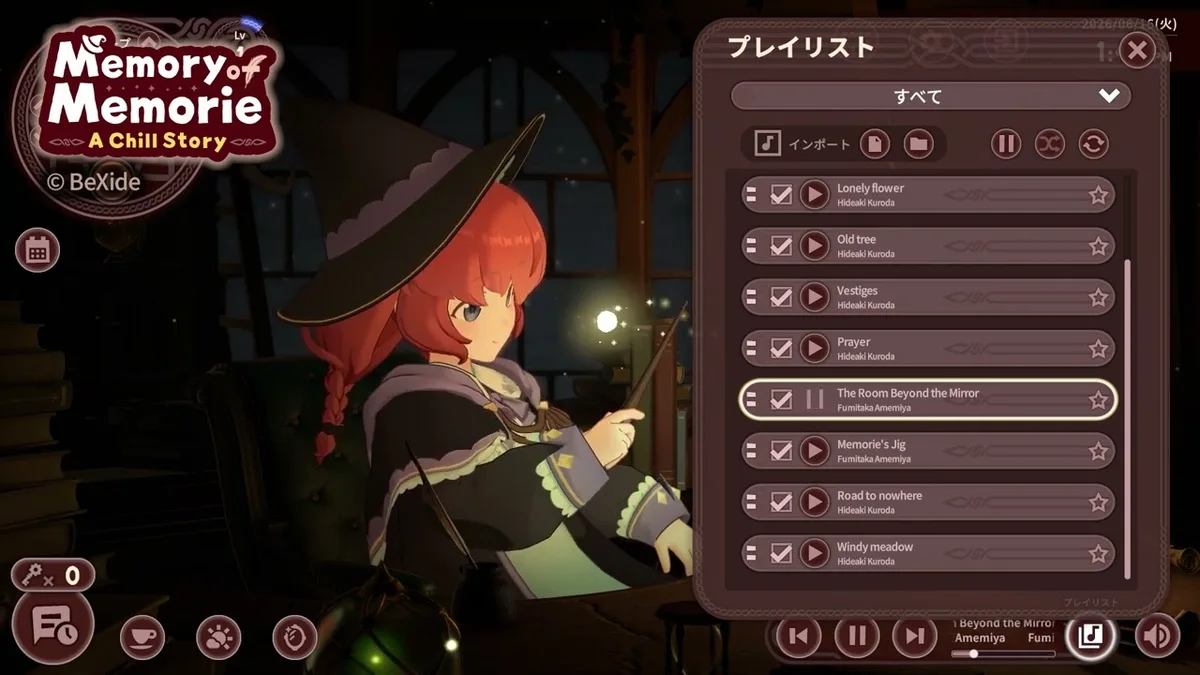
Premise
Memory of Memorie : A Chill Story (BeXide Inc., July 2026) is a story-driven productivity adventure. You share a witch’s desk while completing real Pomodoro focus sessions. Narrative progression spends keys earned from level-ups to reveal memories tied to Memorie, an apprentice witch, and her home in Elmana Village.
The title pun—memory of Memorie—signals that plot explores how we remember people, routines, and places that shape our working lives.
Main cast and setting
Memorie balances apprenticeship duties with quiet vulnerability. She is not a power fantasy protagonist; she learns alongside you as your calendar fills with completed blocks.
Elmana Village provides Celtic-flavored streets, soft color palettes, and ambient life outside the desk. Environmental storytelling complements dialogue at the Lightroot Tree, where major chapters anchor.
Supporting figures appear across acts—village elders, fellow apprentices, and symbolic magical elements unlocked via Magic Unlocks. Names and roles unfold naturally; this overview avoids listing late introductions.
Thematic pillars
| Theme | Gameplay expression |
|---|---|
| Memory | Story keys literally unlock remembered scenes |
| Rest | Pomodoro breaks mirror narrative beats about burnout |
| Ritual | Daily focus replaces grind combat |
| Growth | Room customization visualizes progress |
| Community | Village events respond to cumulative focus days |
Act structure (spoiler-light)
Act I — Arrival at the desk: Tutorial focus loops, first keys, introductory Lightroot visions explaining why Memorie needs a co-worker spirit (you).
Act II — Village threads: Optional side moments, deeper calendar integration, room items reflecting Memorie’s past hobbies and failures.
Act III — Confronting forgetting: Emotional stakes rise about what happens when rituals break; Pomodoro discipline becomes narrative metaphor.
Act IV — Resolution: Culmination at the Lightroot Tree and epilogue scenes rewarding long-term streaks—not single-day binges.
Exact chapter numbers and key counts live in Chapter Guide. Finale interpretation is isolated in Ending Explained.
Relationship to productivity fantasy
BeXide frames the game as work-with-me, not watch-me. Story respects that you have real tasks—classes, remote jobs, creative projects. Dialogue often acknowledges interrupted weeks without punishing players harshly, aligning with the chill marketing tone.
Language and platforms
Steam ships UI text in English, Japanese, Simplified Chinese, Traditional Chinese, and Korean. Switch family ports follow Nintendo localization policies. Story content is the same across PC and console; control differences are documented under Controls.
Before you continue
Ensure you understand Experience and Keys so overview beats make mechanical sense. Demo players should read Demo Carryover to avoid repeating Act I unintentionally.
Memorie’s overview is simple: show up, focus, remember together. The walkthrough details are just signposts along that path.
Narrative frame: witch apprentice and player co-presence
Memory of Memorie : A Chill Story follows Memorie, a witch apprentice doubting her place in Elmana Village. BeXide Inc. uses gentle meta awareness—the player shares the desk through Pomodoro focus rather than avatar combat. Keys unlock memories at the Lightroot Tree; room unlocks show domestic growth parallel to emotional arcs.
Celtic ambience shifts during storm-week chapters; demo covered early acts only (four-to-five hours) before July 2026 full release continued mid-act threads. Achievement Village Memory flags optional kindness routes worth one saved key.
Extended reference
This section adds practical context for Memorie narrative structure in Memory of Memorie : A Chill Story. BeXide Inc. released the title in July 2026 on Steam (Windows and macOS), Nintendo Switch, and Nintendo Switch 2 Edition. You play beside Memorie, an apprentice witch in Elmana Village, progressing through honest Pomodoro focus rather than combat grinding.
Keys arrive from experience level-ups after completed work blocks. Spend them at the Lightroot Tree for story beats or on room unlocks and magic unlocks documented in the Unlocks hub. The in-game calendar logs finished sessions—pair calendar streaks with Achievement Tips when hunting all 15 Steam achievements.
Platform parity matters for daily habits. Switch handheld sessions should still use in-game timer completion so calendar dots and XP register; PC players alt-tabbing during blocks risk losing focus without pausing real-world obligations. Demo veterans migrating saves should read Demo Progress Carryover before assuming key balances match a fresh start.
For session planning, cross-read How to Use Pomodoro, Experience and Keys, and Chapter Guide so Memorie narrative structure decisions align with your real schedule. Memorie’s chill tone rewards gentle consistency—return after busy days without punitive resets.
Community verification
Fan wiki pages update after major patches. Confirm store listings on Steam when key tables or achievement wording shift. Nintendo eShop notes for Switch 2 Edition may mention sharper UI scaling without changing Pomodoro rules.
Returning players often ask whether missed calendar days block story progress—they do not. Memorie waits at the desk until you finish your next honest block, then keys flow again from XP. Optional Lightroot Tree branches may need saved keys; note planned spends in Focus Session Planner before marathon study nights on Steam or Switch 2.
Frequently Asked Questions
Quick answers about Memory of Memorie : A Chill Story.
Is there romance?
Marketing emphasizes friendship and mentorship tones; interpret subtext personally without wiki spoilers.
Voice acting?
Check in-game credits per language; some locales may be text-forward.
Branching endings?
See Ending Explained after completion; major routes are not combat-choice based.
Skip story possible?
You can delay key spends, but core game identity is narrative plus focus combined.